#A001CREATEDlaptop · MacBook Pro 16"
#A001ASSIGNEDana.r
#A001RETURNEDoffboarding · wiped
#A001ASSIGNEDmarco.v
#A001ASSIGNEDjoaquin// the very first one
Self-hosted IT asset & access management
lazyit is the system of record for the five-person team that runs everything — inventory, access, secrets, knowledge. Append-only history, soft-deletes, no telemetry, AGPL. Nothing quietly disappears.
git clone https://github.com/joacominatel/lazyit && cd lazyit./infra/start.sh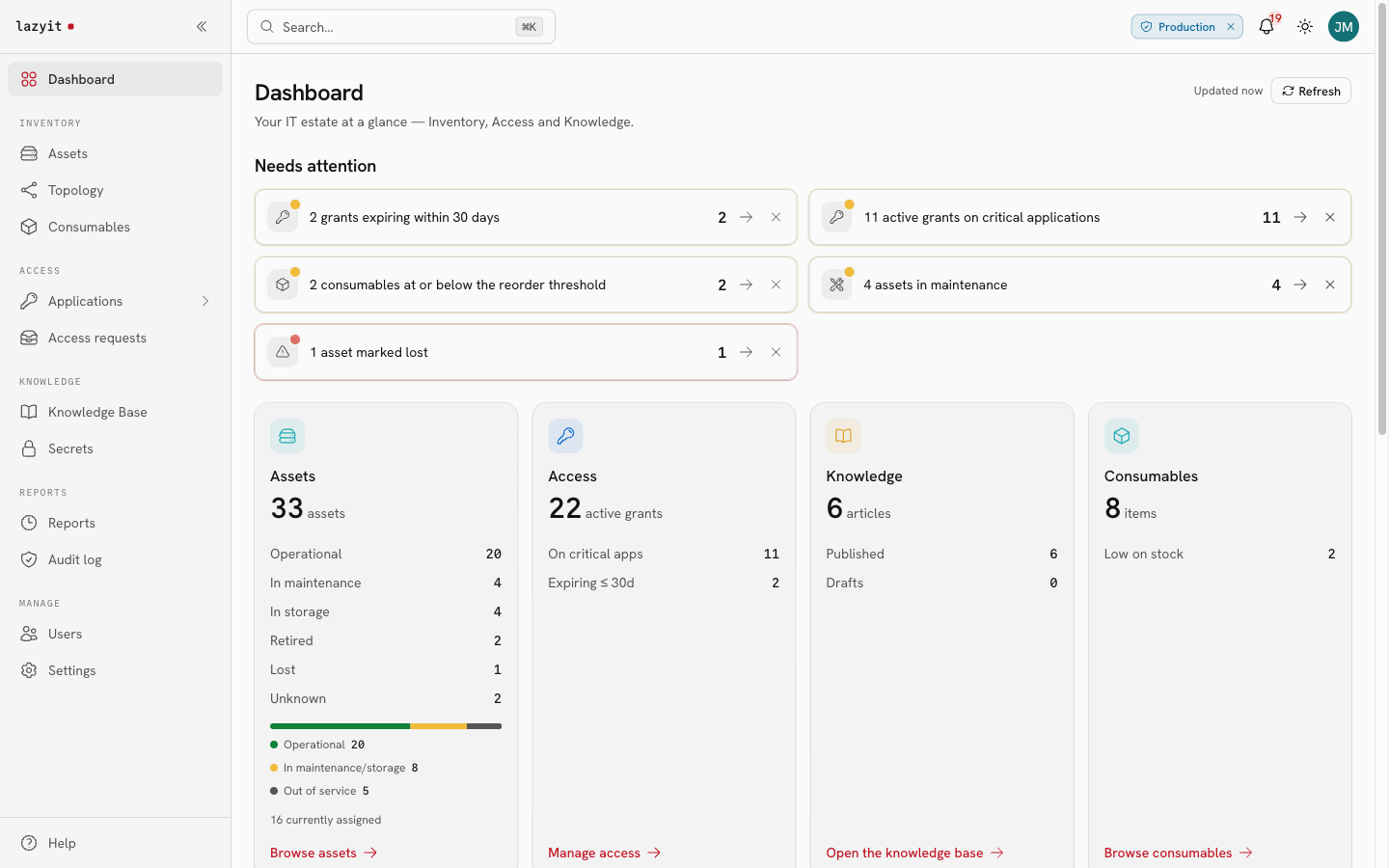
Every line is an event that actually happened — created, assigned, returned, reassigned. Append-only, top to bottom. You can read off exactly who had what, and when, without trusting anyone's memory.
Spreadsheets lie by omission. Ledgers don't.
Three properties baked into the data model — not settings you remember to switch on.
Every change is a new line, never an edit in place. The past stays exactly as it happened.
Retire isn't erase. Offboard a person, decommission a laptop — the record stays on file.
It never phones home. No tracking, no per-seat billing. Your data lives on your servers and stays yours.
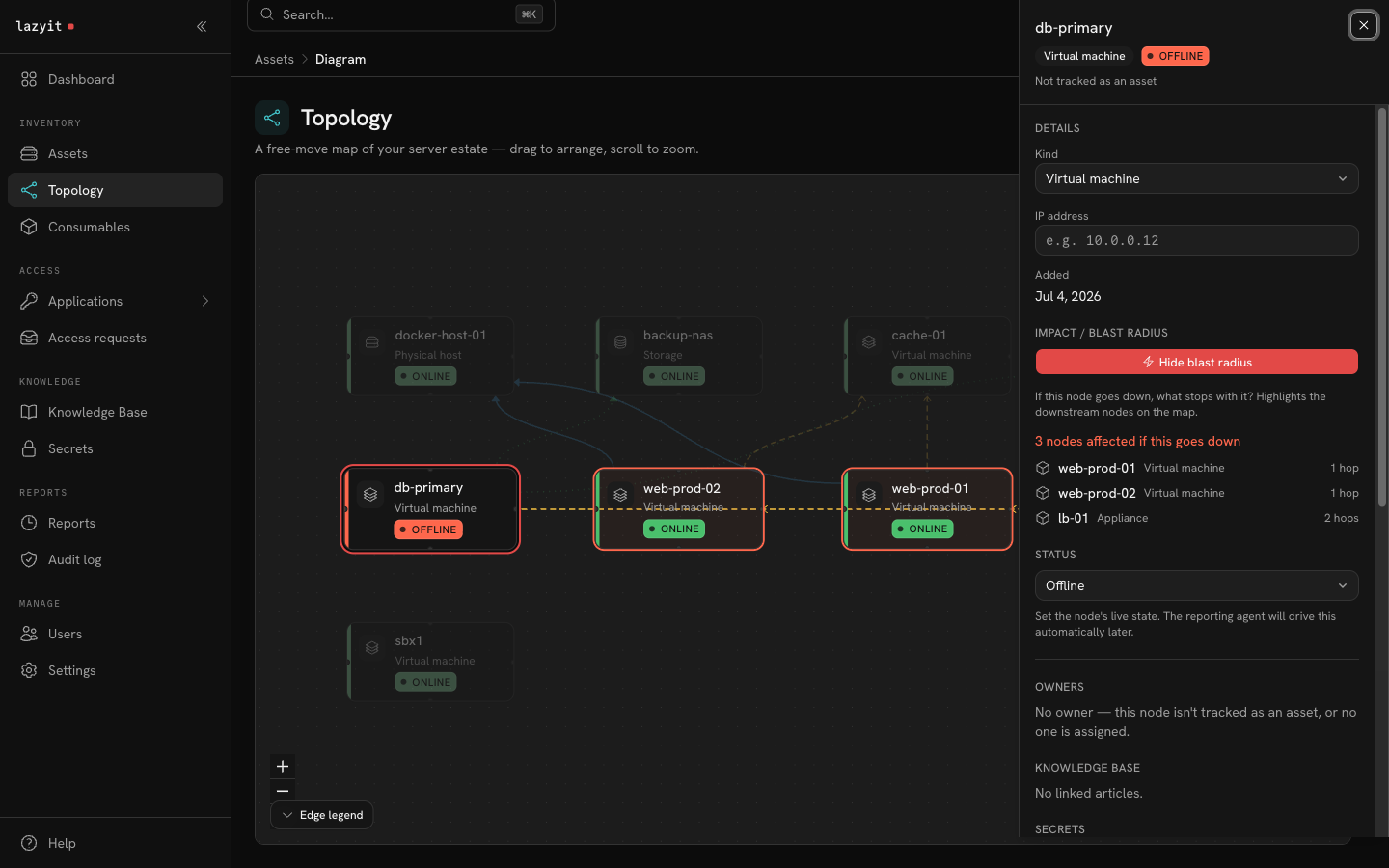
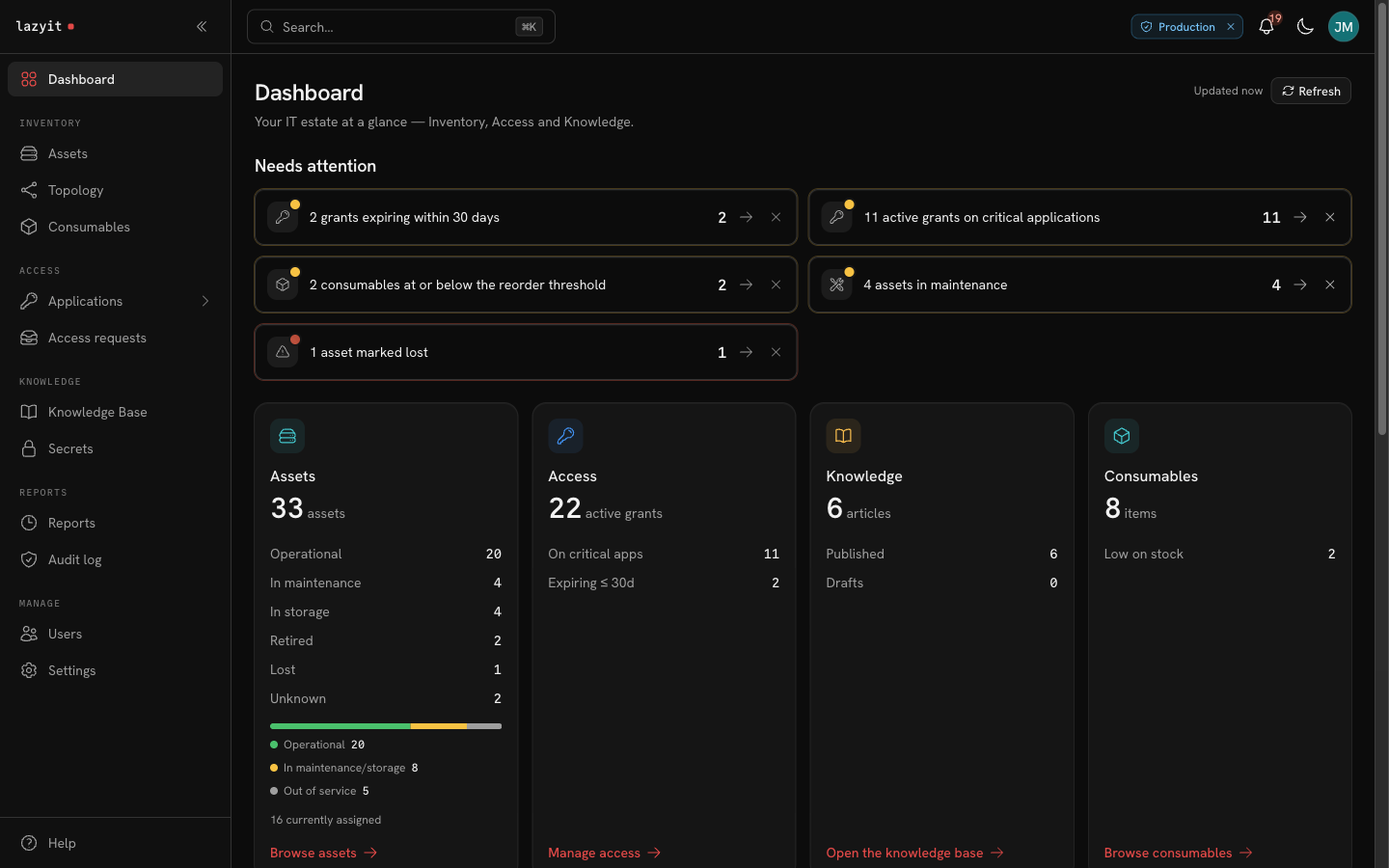
Two parts of the record, doing their job — real screens from a running instance, not diagrams.
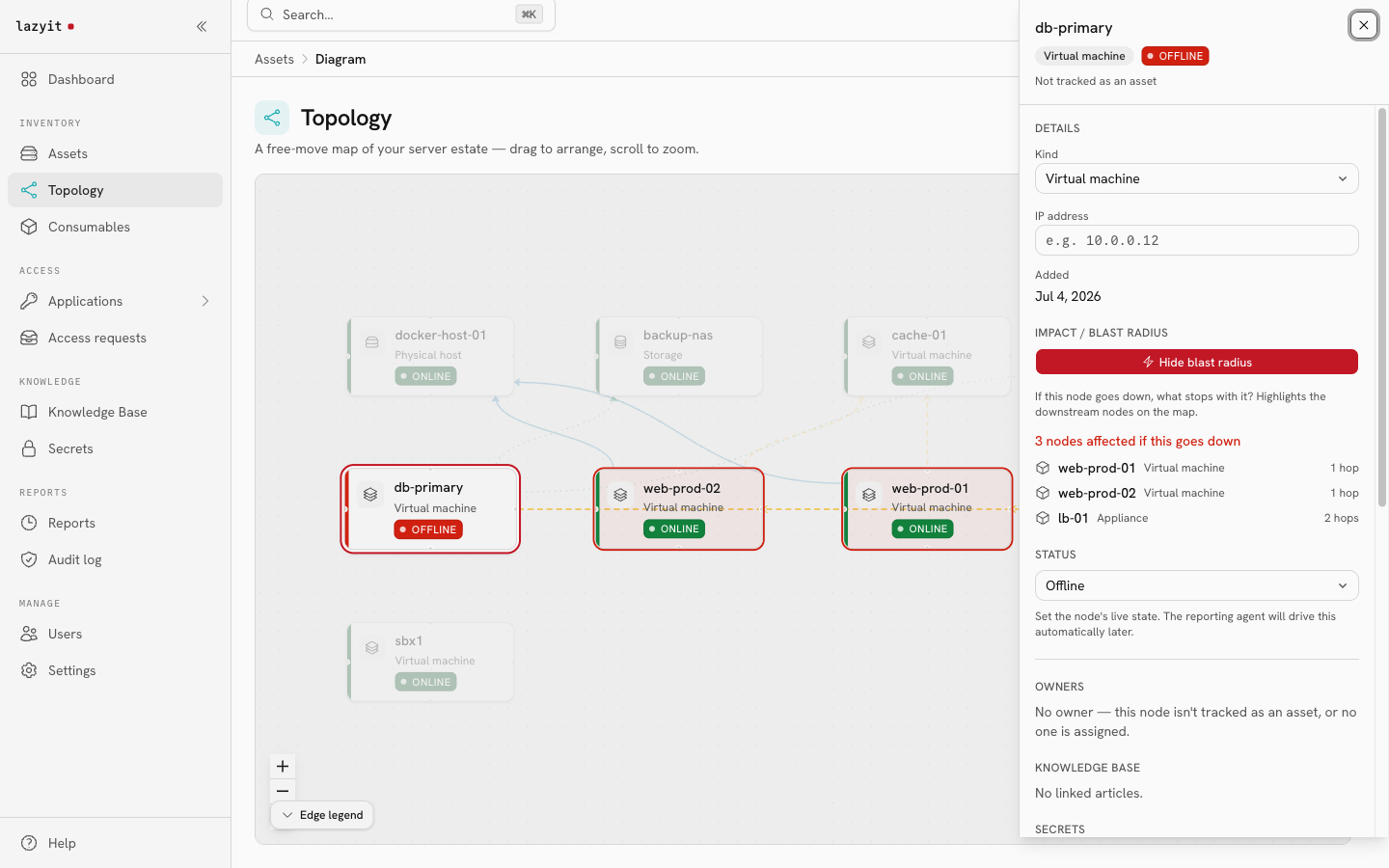
When db-primary dies, you already know what dies with it.
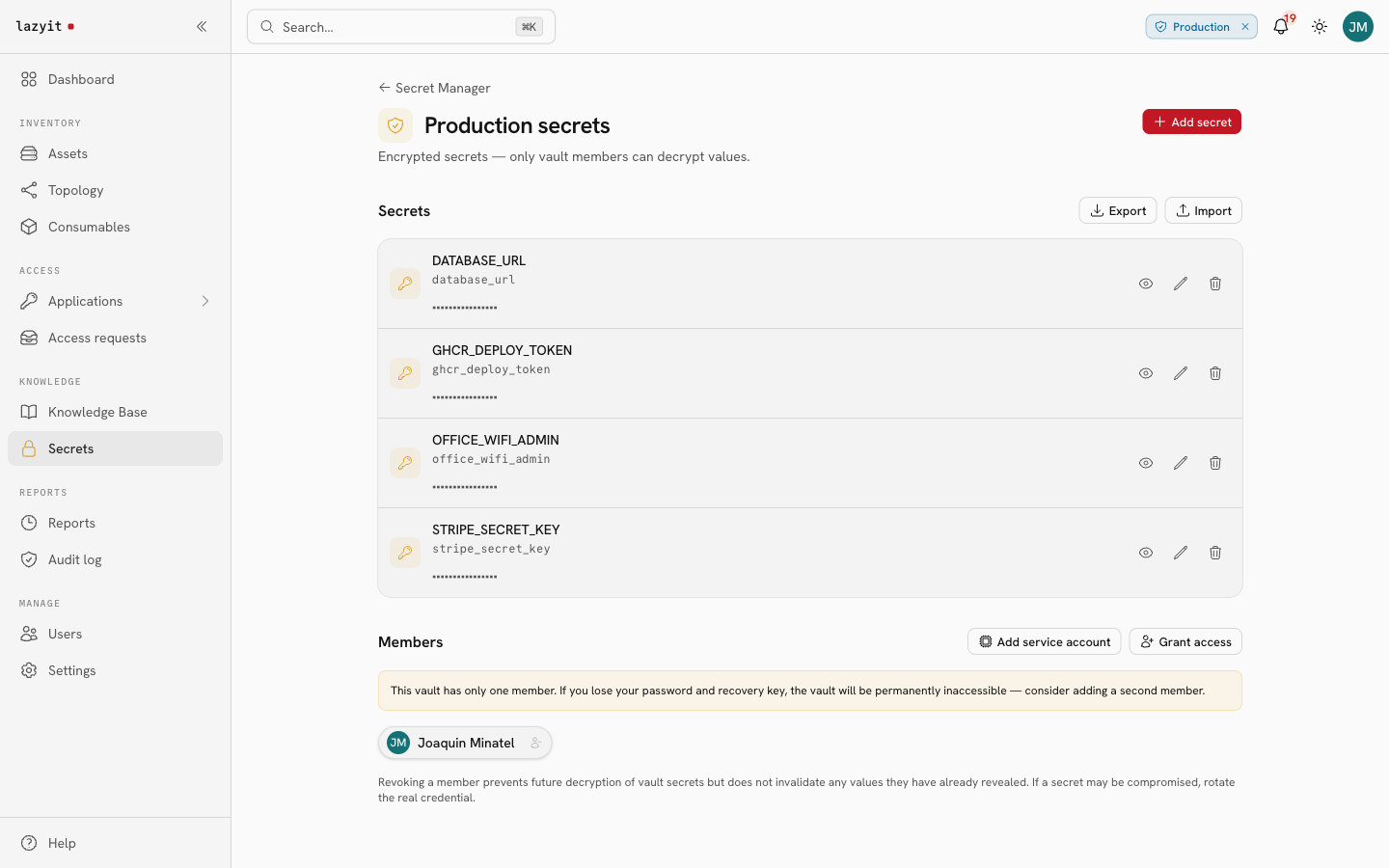
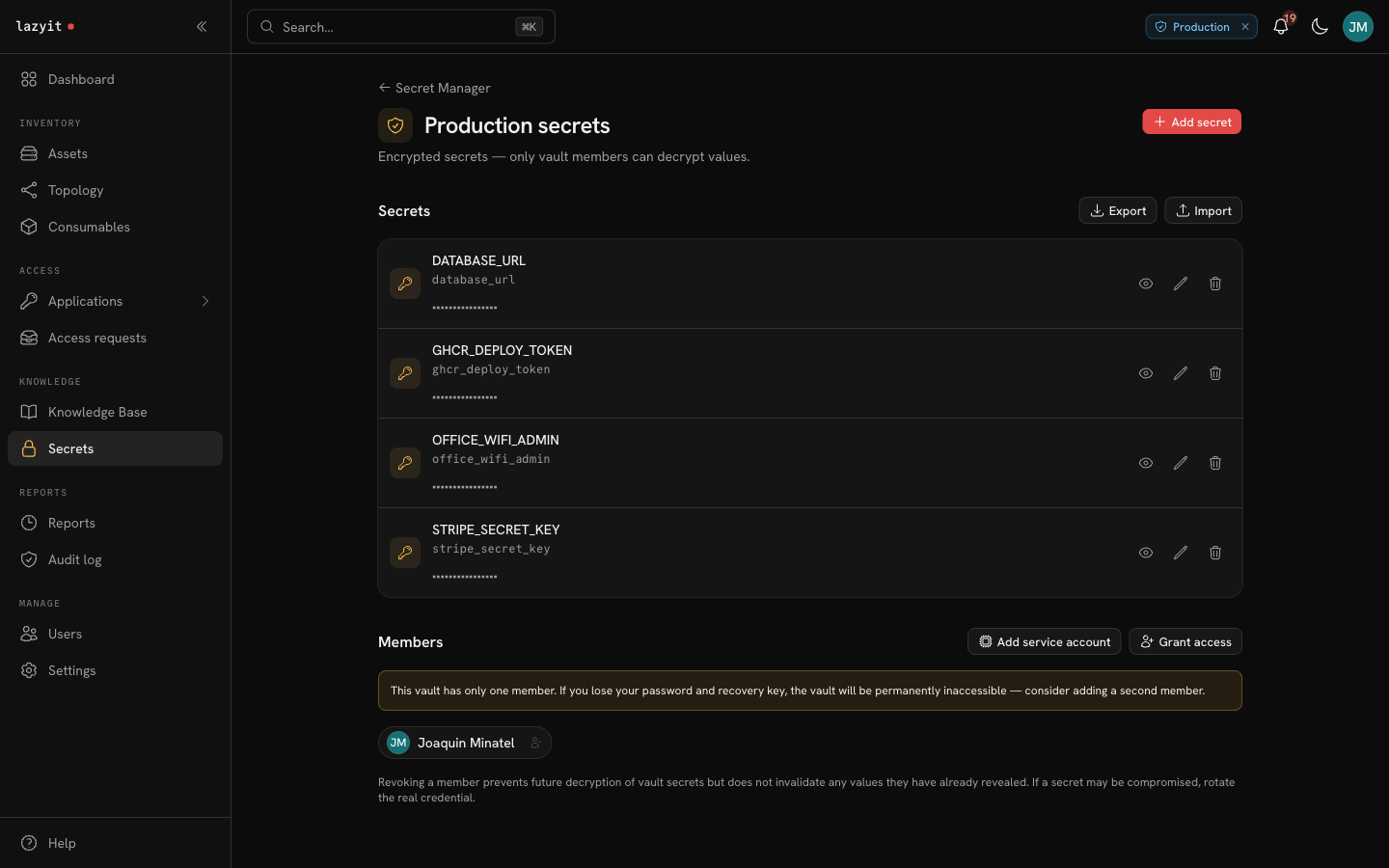
The server stores a shape it can't open. No master key, no back door.
Secrets are encrypted in your browser before they ever reach lazyit. What lands on the server is a shape it can't open: no master key, no back door, nothing an admin or a backup could ever hand over.
Stamped, not promised — check the source. It's AGPL.
How it works →12 items · 4 members
The server can never decrypt your secrets.
One system, one timeline. Here's the rest of what lives in it — read off the line you came for.
What you actually run, and how it comes up — no moving parts you didn't ask for.
./infra/start.shI built lazyit because I was the IT team, and the spreadsheet was killing me.
No procurement, no committee — just one person tired of guessing who had which laptop. So I wrote down the thing I wished I'd had: a record that doesn't lie, on hardware I control.
It's built in the open and AGPL-licensed. If I disappear tomorrow, you still have the code and your data. You're never stranded.
One command, on your own servers. No account, no trial, no telemetry.
docker compose up